
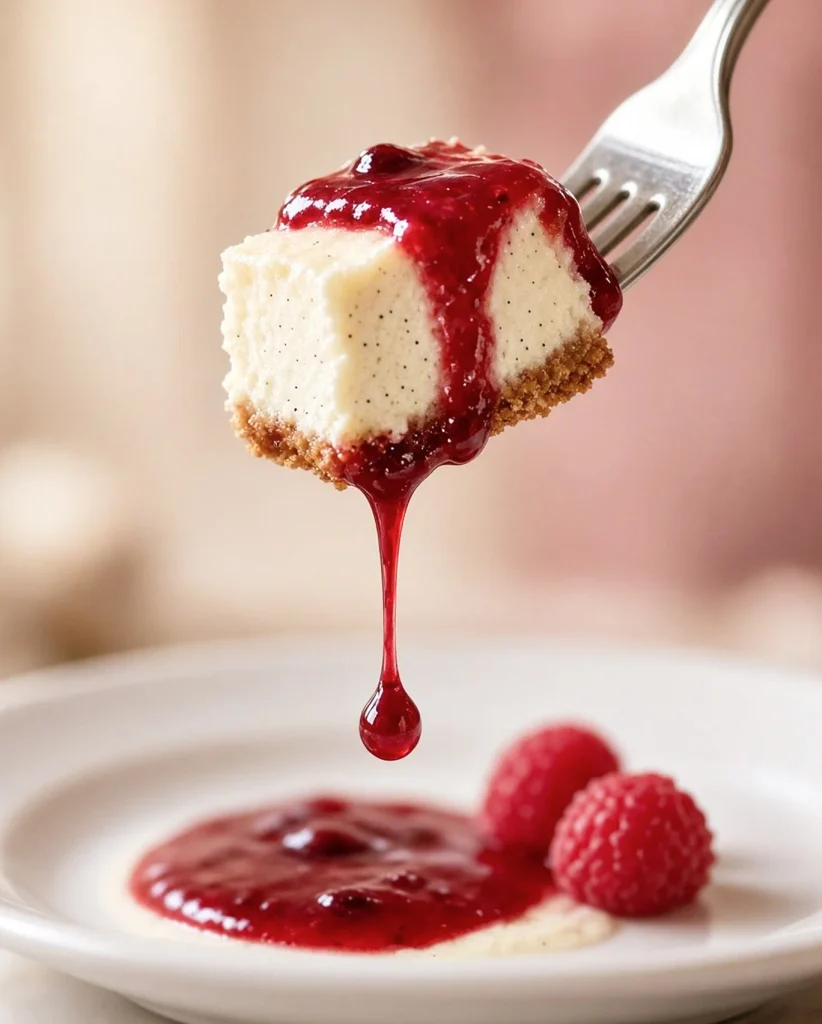
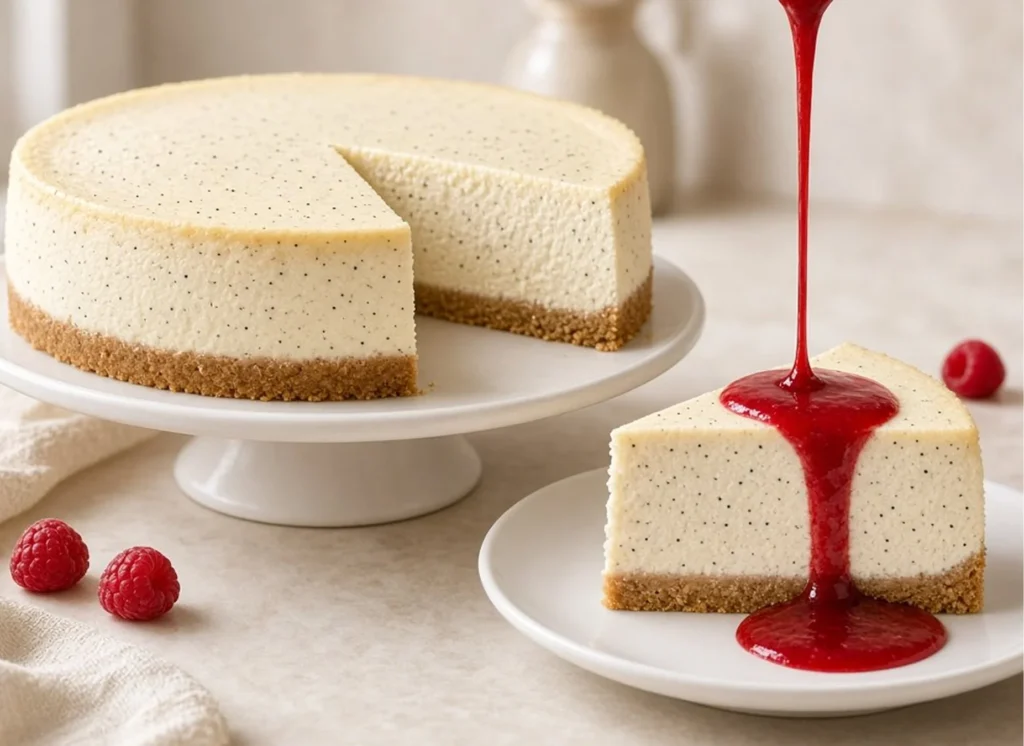
A dense, creamy baked cheesecake flecked with real vanilla seeds, on a buttery graham cracker crust, finished with a bright raspberry sauce.
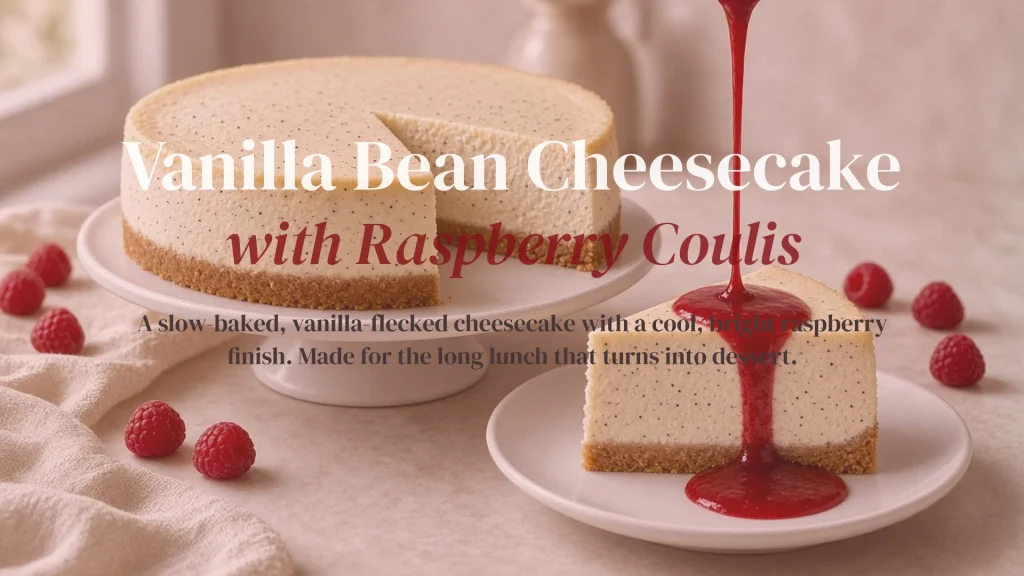
A baked vanilla cheesecake is one of those desserts that looks simple and rewards patience. The filling is thick and smooth, the crust is crisp and buttery, and the real vanilla seeds scattered through the cream give every slice its speckled look. A spoonful of tart raspberry coulis on the side cuts through the richness and adds a splash of colour.
None of the steps are difficult, but a few details decide whether the top stays smooth: ingredients at room temperature, a gentle mix, a water bath, and a slow cool-down. This guide walks you through each one.
TAHACOOKS
Based in London, Taha is a professional recipe developer and food photographer. Since launching TahaCooks in 2025, he has shared his decade of culinary expertise to help home cooks master gourmet flavors. Every recipe on the site is triple-tested and designed to bring restaurant-quality results to the everyday kitchen.

Vanilla Bean Cheesecake with Raspberry Coulis
Equipment
- 1 9-inch Springform Pan Essential for removing the cheesecake without damaging the delicate edges.
- 1 Large Roasting Pan Must be large enough to hold the springform pan for the bain-marie (water bath).
- 1 Heavy-Duty Aluminum Foil Use extra-wide foil to wrap the bottom of the pan to prevent water leakage.
- 1 Stand Mixer or Hand Mixer Fitted with a paddle attachment to minimize air incorporation.
- 1 Fine-Mesh Sieve Crucial for straining the raspberry coulis to achieve a seedless, silky finish.
- 1 Small Paring Knife Used to split and scrape the "caviar" from the vanilla bean pods.
Ingredients
The Graham Cracker Crust
- 1.5 cups Graham Cracker Crumbs Approx. 10-12 full sheets, finely pulsed.
- 3 tbsp Granulated Sugar Helps caramelize the crust during the pre-bake.
- 6 tbsp Unsalted Butter Melted; use high-quality butter for better flavor.
- 1/4 tsp Salt Fine sea salt to balance the sweetness.
The Vanilla Bean Filling
- 32 oz Full-Fat Cream Cheese 4 blocks (225g each); must be room temperature.
- 1 cup Granulated Sugar Superfine sugar dissolves most evenly.
- 1 cup Full-Fat Sour Cream Adds the signature "tang" and velvety texture.
- 2 whole Vanilla Beans Madagascar Bourbon or Tahitian; split and scraped.
- 4 large Eggs Room temperature; added one at a time.
- 1 tsp Pure Vanilla Extract Optional; reinforces the base notes.
The Raspberry Coulis
- 12 oz Fresh Raspberries Can use frozen (thawed), but fresh is more vibrant.
- 1/4 cup Powdered Sugar Dissolves instantly into the cold fruit purée.
- 1 tbsp Fresh Lemon Juice Essential for brightness and setting the color.
Instructions
- Follow these high-precision steps to ensure your Vanilla Bean Cheesecake achieves a professional, crack-free finish with a silky-smooth Raspberry Coulis.
- The Crust FoundationAssociated Ingredients: Graham Cracker Crumbs, Melted Butter, Sugar Preheat your oven to 175°C. Combine the crumbs, sugar, and melted butter until the mixture resembles wet sand. Firmly press this into the bottom and 1/2 inch up the sides of your 9-inch springform pan.
- Action: Bake for 10 minutes, then set aside to cool completely. This creates a moisture barrier for the filling.
- The Vanilla InfusionAssociated Ingredients: Vanilla Beans, Cream Cheese, Sugar Split the vanilla beans lengthwise. Using the back of a paring knife, scrape the "caviar" seeds from the pod.
- Action: In a stand mixer with the paddle attachment, beat the cream cheese and sugar on low speed until perfectly smooth. Add the vanilla seeds and sour cream, mixing until just combined.
- The Low-Air IntegrationAssociated Ingredients: Eggs Add the eggs one at a time, mixing on the lowest speed only until the yellow disappears.
- Action: Do not over-mix! Over-mixing incorporates air, which causes the cheesecake to rise and then crack. If you see lumps, pass the batter through a fine-mesh sieve into the pan.
- The Bain-Marie (Water Bath)Associated Ingredients: Hot Water Wrap the outside of your cooled springform pan in three layers of heavy-duty aluminum foil to ensure a waterproof seal.
- Action: Place the wrapped pan into a large roasting pan. Pour hot water into the roasting pan until it reaches halfway up the sides of the springform pan. Bake at 160°C for 75 minutes.
- The "Jiggle" Set & CoolingTurn off the oven when the edges are set but the center (about 2 inches) still wobbles slightly when shaken.
- Action: Crack the oven door open and let the cake cool inside for 1 hour. This slow temperature drop is the secret to a crack-free top. Transfer to the fridge and chill for at least 8 hours.
- The Silky Raspberry FinishAssociated Ingredients: Raspberries, Powdered Sugar, Lemon Juice While the cake chills, blend the raspberries, sugar, and lemon juice until liquefied.
- Action: Press the purée through a fine-mesh sieve to remove all seeds.
- Pour the smooth coulis over individual slices or the whole cake just before serving.
Notes
A Note Before You Start
When I want a dessert that feels special but can be made ahead, this is the cheesecake I choose. Nearly all of the work happens the day before, so there’s very little left to do once guests arrive, and the raspberry sauce takes just a few minutes at the end. My one tip is to read the whole method before you begin, because the long chill in the fridge is what gives the cheesecake its dense, creamy texture.
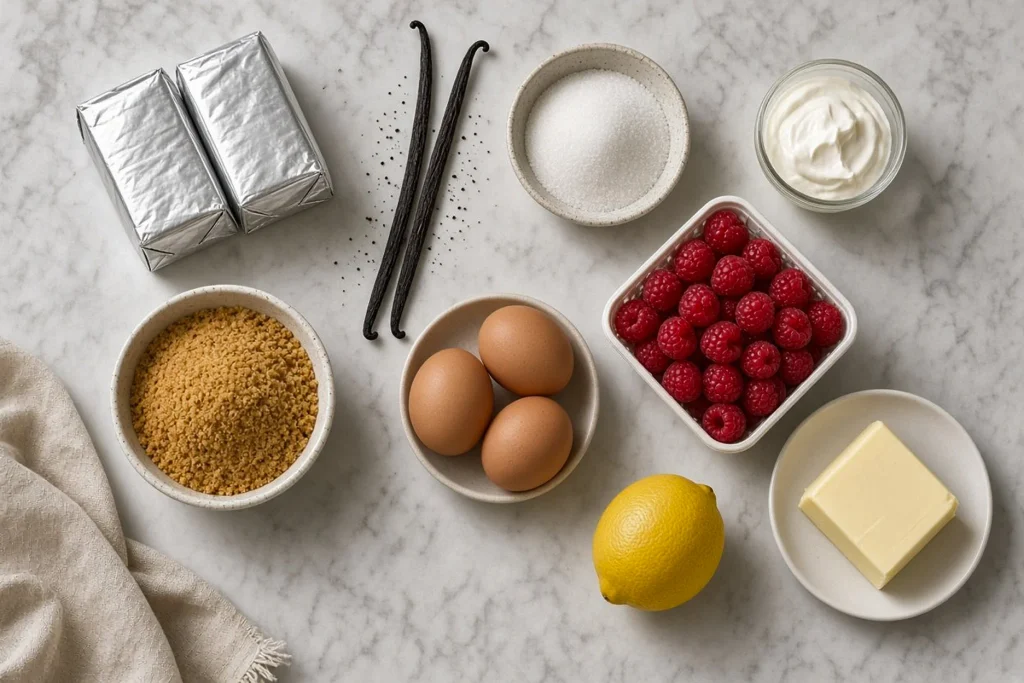
A Cheesecake Built in Three Layers
Each part of this dessert has a job.
- The crust is a crisp graham cracker base, pre-baked so it stays firm under the filling.
- The filling is cream cheese, sugar, sour cream, eggs, and vanilla beans. The sour cream adds a gentle tang and keeps the texture creamy.
- The coulis is fresh raspberries blended with powdered sugar and lemon juice. Its sharpness balances the sweet, rich cake.
If you are in the UK, digestive biscuits are the usual substitute for graham crackers. Crush them finely and use the same weight as the crumbs on your recipe card.
Vanilla Beans or Extract?
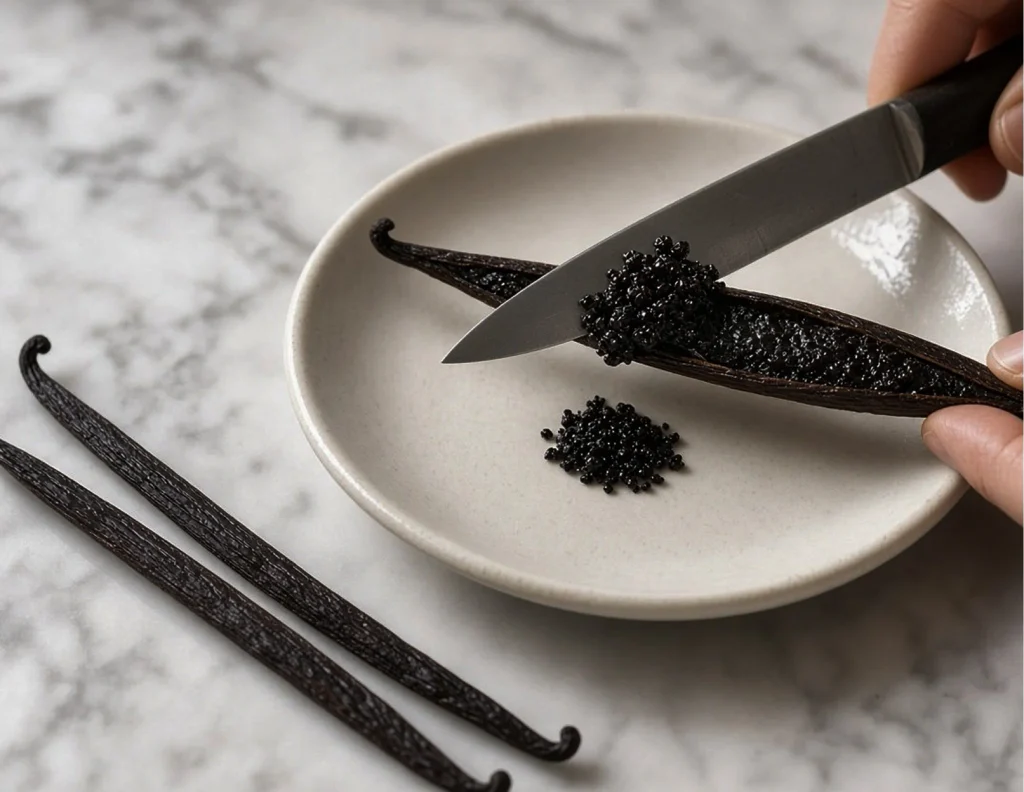
You can make this cheesecake with extract alone, but whole vanilla beans change how it looks and smells. Split each pod lengthwise and scrape out the seeds with the back of a knife. The seeds give you the tiny black flecks that make a vanilla cheesecake recognisable, and they give a fuller, warmer aroma than extract alone.
Your recipe also includes a teaspoon of pure vanilla extract, which is optional. It adds a little more vanilla flavour if you want it. Madagascar Bourbon beans taste rich and creamy, while Tahitian beans are more floral, so use whichever you prefer.
Don’t throw away the empty pods. Push them into a jar of sugar for a few days to make your own vanilla sugar.
The Crust That Keeps the Filling Dry
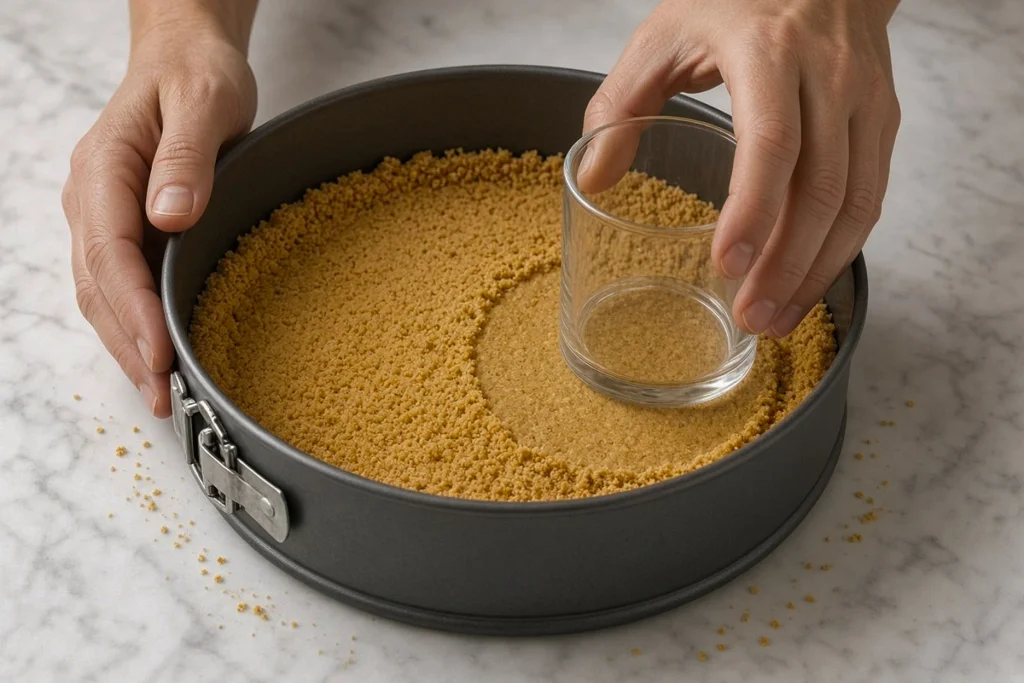
Mix the crumbs, sugar, salt, and melted butter until the mixture looks like wet sand. Press it firmly into the base of a 9-inch springform tin and about 1/2 inch up the sides. A flat-bottomed glass or measuring cup helps you get it even and compact.
Then bake the crust for 10 minutes and let it cool completely. This short bake sets the crumbs, and it creates a barrier between the crust and the wet filling, so the base stays crisp instead of turning soggy.
Mixing for a Smooth Batter, Not a Fluffy One
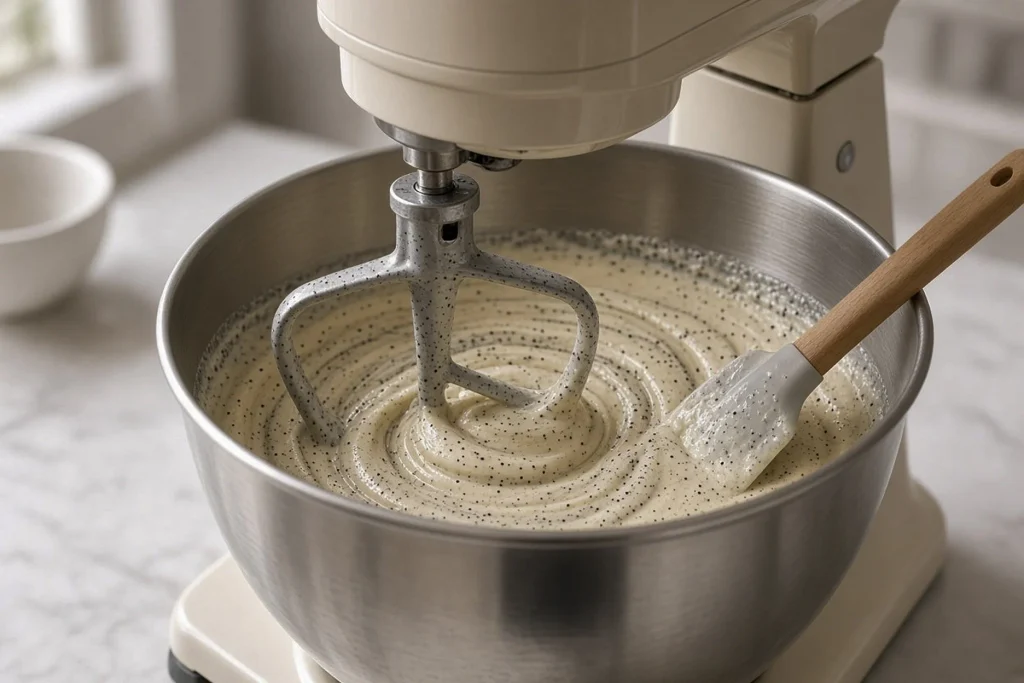
Cheesecake batter should be smooth and dense, not light and airy. Too much air makes the cake rise in the oven and then crack as it cools.
- Start at room temperature. Take the cream cheese, eggs, and sour cream out of the fridge an hour or two before you begin. Cold cream cheese stays lumpy.
- Use the paddle, not the whisk. A paddle attachment on low speed mixes without whipping in air.
- Add the eggs one at a time. Mix on the lowest speed, and stop as soon as the yellow streaks disappear.
- Sieve if needed. If you see lumps, pour the batter through a fine-mesh sieve into the tin.
The Water Bath, Step by Step
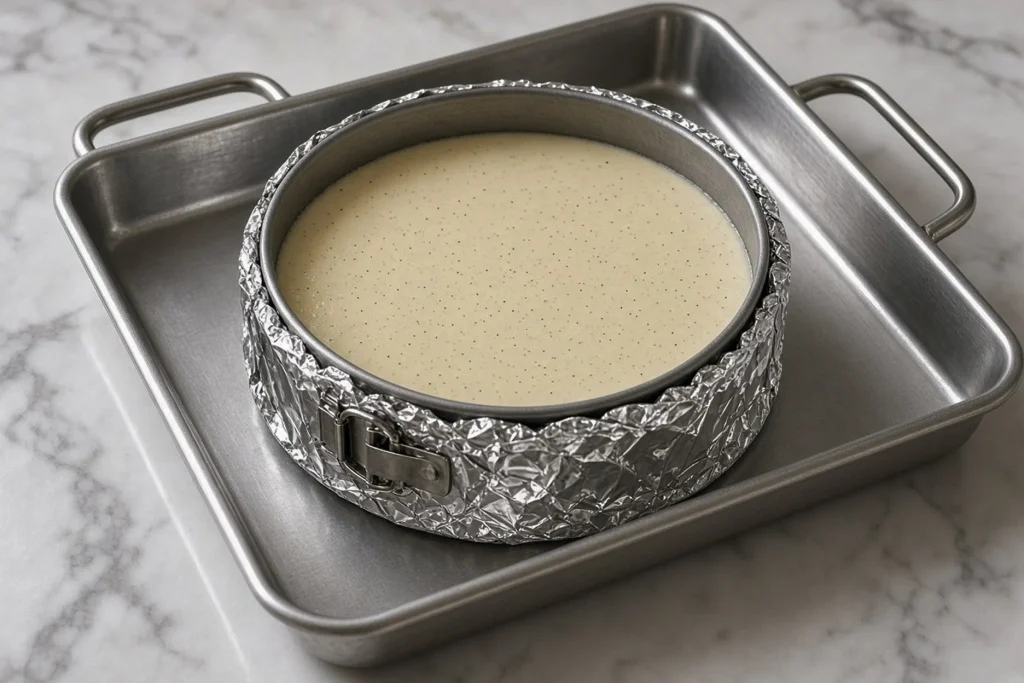
A water bath, or bain-marie, surrounds the cheesecake with gentle steam. It keeps the edges from overcooking and helps the whole cake bake evenly.
- Wrap the outside of the cooled springform tin in three layers of heavy-duty foil, so water can’t leak in.
- Stand the tin in a large roasting pan.
- Pour in hot water until it comes halfway up the sides of the tin.
- Bake at 160°C for 75 minutes.
Check your tin for gaps before wrapping. If the foil leaks, the crust will soak up water and go soft.
Knowing When It’s Done
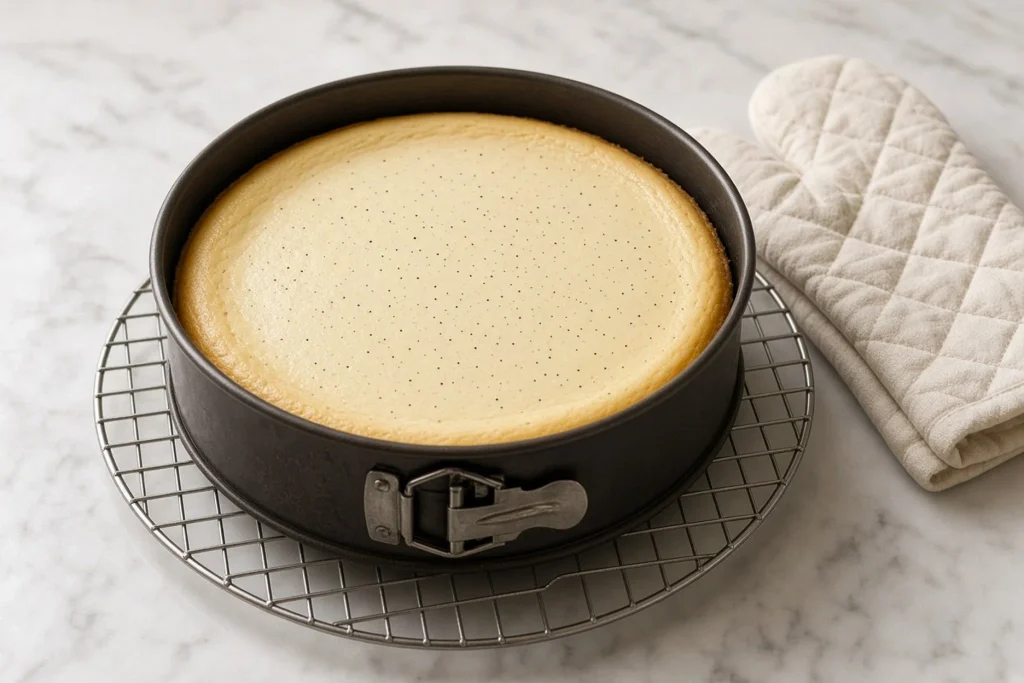
Cheesecake isn’t ready when it’s firm all the way through. Gently shake the tin. The edges should be set, with only the centre, about 2 inches across, wobbling slightly, like set gelatin. The middle finishes setting as it cools.
Then turn off the oven, crack the door open, and leave the cheesecake inside for 1 hour. This slow drop in temperature is what helps the surface stay smooth, because a sudden change from hot to cold is what makes the top crack.
The Overnight Rest
Once it has cooled in the oven, move the cheesecake to the fridge and chill it for at least 8 hours. Don’t skip this. The filling firms up into a dense, creamy slice, and the vanilla flavour deepens. Cut it too soon and the centre will be soft and hard to slice.
Making the Raspberry Coulis
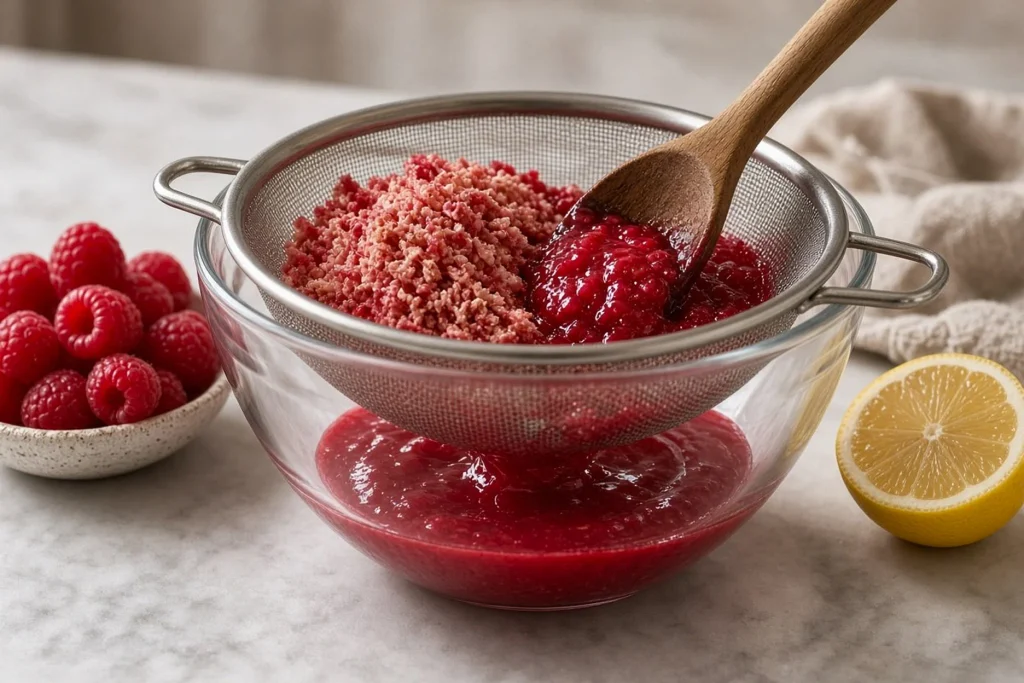
The coulis takes about five minutes while the cake chills.
- Blend the raspberries with the powdered sugar and lemon juice until completely liquid.
- Press the purée through a fine-mesh sieve to remove the seeds.
- Chill until you’re ready to serve.
Fresh raspberries give the brightest colour, but thawed frozen ones work well too. The lemon juice keeps the colour vivid and sharpens the flavour. Taste the sauce and add a little more powdered sugar if your berries are very tart.
Slicing Cleanly
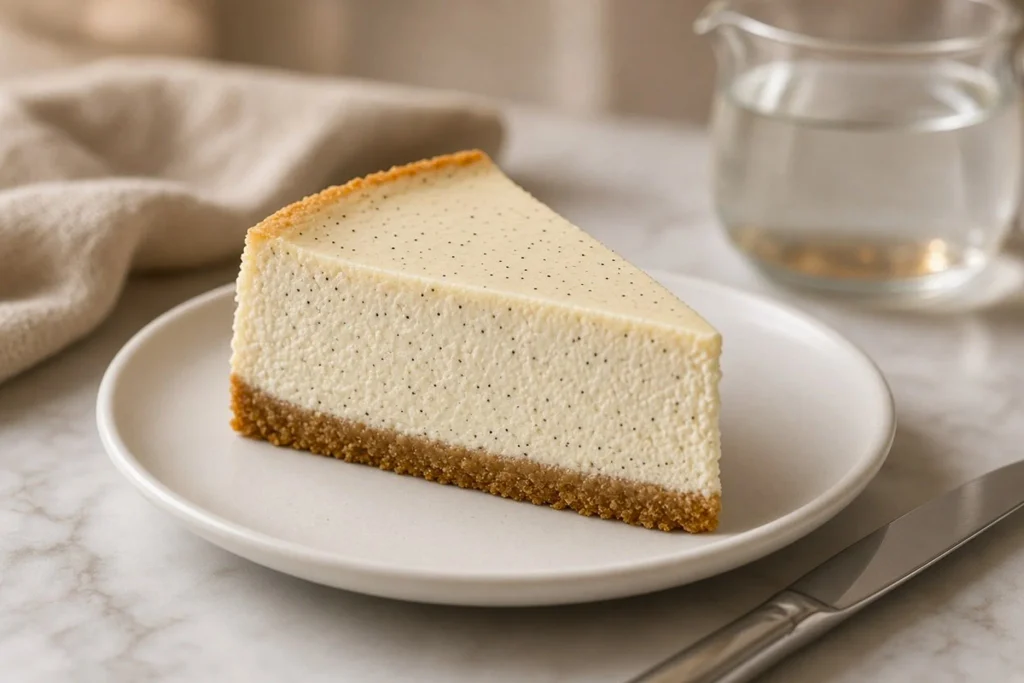
For neat slices, dip a sharp, thin-bladed knife in hot water and wipe it dry before every cut. The warm blade glides through the filling without dragging, and it leaves the vanilla flecks clear and the edges sharp. Pour the coulis over individual slices, or over the whole cake just before serving, so it stays glossy.
When Something Goes Wrong
If the top cracks, the batter probably had too much air in it, or the cake cooled too quickly. A spoonful of coulis hides it, and the taste is unchanged.
If the centre sinks, it may have been overbaked, or the oven door was opened too early. Take it out while the middle still wobbles.
If the filling has lumps, the ingredients were too cold. Next time, give them more time at room temperature, and sieve the batter.
If the crust is soggy, water got into the tin. Use three layers of foil and make sure there are no tears.
Serving, Keeping, and Freezing
- Serving: let the cheesecake stand for 10 to 15 minutes out of the fridge before slicing, so the flavour comes through.
- Fridge: once the cheesecake has cooled, cover it and keep it in the fridge. The Food Standards Agency advises eating cooked leftovers within 2 days, and Food Standards Scotland has a useful guide to chilling food.
- Coulis: store it separately in a covered jar in the fridge and use it within 2 days.
- Freezer: wrap individual slices tightly and freeze them for up to 2 months. Thaw overnight in the fridge, eat within 24 hours of defrosting, and don’t refreeze. See the Food Standards Agency’s advice on freezing and defrosting. Add the coulis fresh.
- Freezer: wrap individual slices tightly and freeze for up to 2 months. Thaw overnight in the fridge, and add the coulis fresh.
The Slow Part Is the Best Part
This cheesecake needs time more than it needs skill. Keep the ingredients at room temperature, mix gently, bake in a water bath, and give it the slow cool and the long chill. You’ll get a rich, smooth cheesecake with clean slices and a bright raspberry finish. Looking for more dessert ideas? Browse my Chocolate Fudge Cake
You Might Also Like:
More Easy dessert Recipes
Almond & Honey Macarons: A Taste of Golden Sweetness
Pistachio and White Chocolate Macaron
Chocolate Chip Cookies with Brown Butter
Vanilla Bean Cheesecake with Raspberry Coulis
Easy Dinner Recipes

Creamy Coconut Chicken Curry – Easy Dinner Recipe
Sticky Teriyaki Meatballs with Rice
Ground Beef Stir Fry: Flash & Umami
