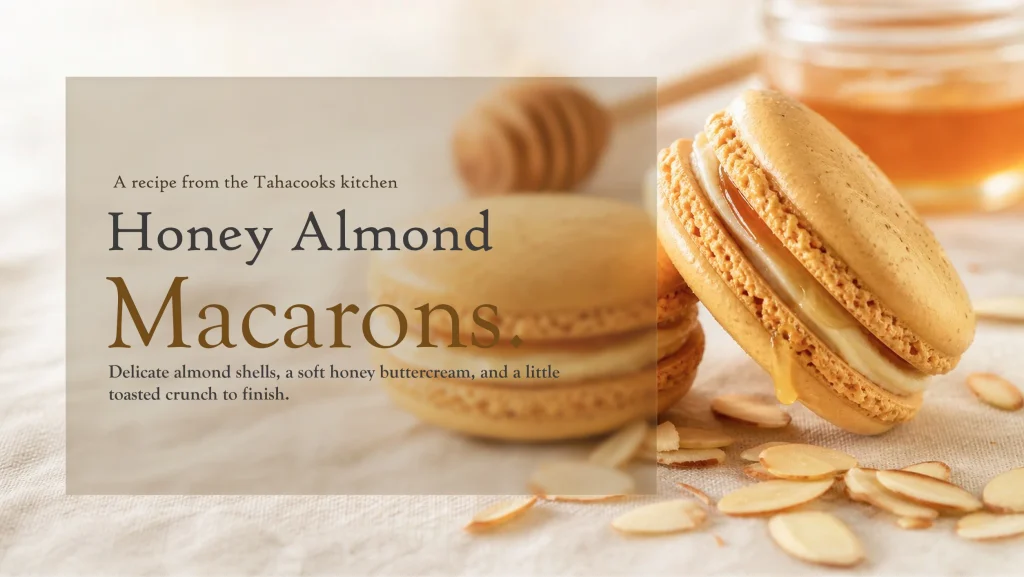
Some flavors just belong together — almond and honey is one of those pairs. We start with our classic macaron shell, crisp on the outside and soft in the middle, then fill it with a buttercream that’s infused with real honey. The result? A cookie that’s nutty, a little floral, and just sweet enough without being overwhelming. It’s the kind of treat you’ll want to slow down for.
Where This Recipe Started
I’ll admit my first attempt at macarons was a disaster — cracked shells, no feet, a filling that slid right out the side. It took a few more tries, a kitchen scale I didn’t own before, and a lot of patience before I got a tray that actually looked the way macarons are supposed to look. But the moment I finally nailed the shell — that crisp outside giving way to something soft underneath — I understood why people get a little obsessed with these. This almond and honey version is the one I keep coming back to, the one I make when I actually want to slow down in the kitchen instead of rushing through a recipe.
TAHACOOKS
Based in London, Taha is a professional recipe developer and food photographer. Since launching TahaCooks in 2025, he has shared his decade of culinary expertise to help home cooks master gourmet flavors. Every recipe on the site is triple-tested and designed to bring restaurant-quality results to the everyday kitchen.
Almond & Honey Macarons: A Taste of Golden Sweetness
Equipment
- 1 Stand Mixer or Hand Mixer For whipping egg whites to stiff peaks
- 1 Fine-Mesh Sieve For sifting almond flour and powdered sugar
- 2 Baking Sheets Light-colored, not dark — dark pans can over-brown shell bottoms
- 2 Parchment paper sheets Or silicone baking mats with piping guides
- 1 Piping Bag
- 1 Round piping tip (Ateco #806 or similar) About ½ inch opening
- 1 Rubber Spatula For macaronage (folding technique)
- 1 Kitchen Scale Highly recommended — macarons are sensitive to precise gram measurements
- 1 Oven thermometer Optional, but useful since ovens often run hotter/cooler than the dial shows
- 1 Cooling Rack
- 1 Airtight container For maturing/storing the filled macarons
Ingredients
- 110 g Almond flour Finely ground; sift to remove large pieces
- 200 g Powdered sugar
- 100 g Egg whites Room temperature, ideally aged 24 hrs
- 50 g Granulated sugar
- 1 tbsp Honey
- 1/4 tsp Cream of tartar Stabilizes the meringue
- 1 pinch Salt
For the Honey Buttercream Filling
- 115 g Unsalted butter Softened to room temperature
- 150 g Powdered sugar
- 2 tbsp Honey
- 1/2 tsp Vanilla extract
For Garnish
- 2 tbsp Sliced almonds Toasted
Instructions
For the Macaron Shells
- Sift dry ingredients — Sift together the almond flour and powdered sugar into a bowl, discarding any large almond pieces left behind. Set aside.
- Whip egg whites — In a clean, grease-free bowl, beat egg whites with cream of tartar and salt until foamy. Gradually add granulated sugar, beating until stiff, glossy peaks form.
- Add honey — Beat in the honey until just combined and the meringue holds its glossy peak
- Macaronage — Fold the almond flour mixture into the meringue in three additions, using a spatula to fold and press against the bowl until the batter flows like lava and forms a ribbon when lifted.
- Pipe the shells — Transfer batter to a piping bag fitted with a round tip. Pipe 1.5-inch rounds onto parchment-lined baking sheets, spacing them evenly.
- Rest the shells — Tap the trays firmly on the counter to release air bubbles, then let the piped shells rest uncovered (about 45 minutes) until they form a dry, matte skin that doesn't stick to your finger.
- Bake — Preheat oven to 300°F (150°C). Bake the shells one tray at a time for about 15 minutes, until they've risen with a distinct "foot" and feel set when gently touched.
- Cool completely — Let the shells cool completely on the tray (about 10 minutes) before peeling them off the parchment.
For the Honey Buttercream
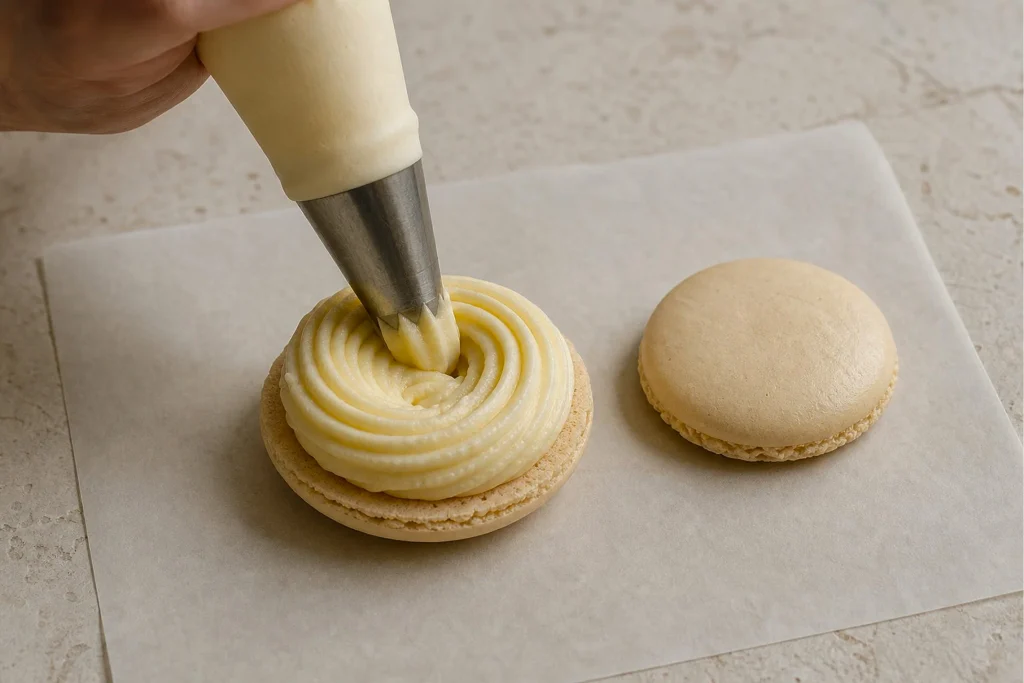
- Make the filling — Beat the softened butter until light and fluffy. Gradually add powdered sugar, then mix in honey and vanilla extract until smooth and spreadable.
Assembly
- Fill and assemble — Pair up shells of similar size. Pipe or spoon the honey buttercream onto one shell of each pair, then sandwich with the second shell. Garnish with a few toasted sliced almonds.
- Mature the macarons — Refrigerate the filled macarons in an airtight container (ideally 24 hours) to let the flavors meld and the texture soften slightly before serving.
Notes
Serving & Presentation
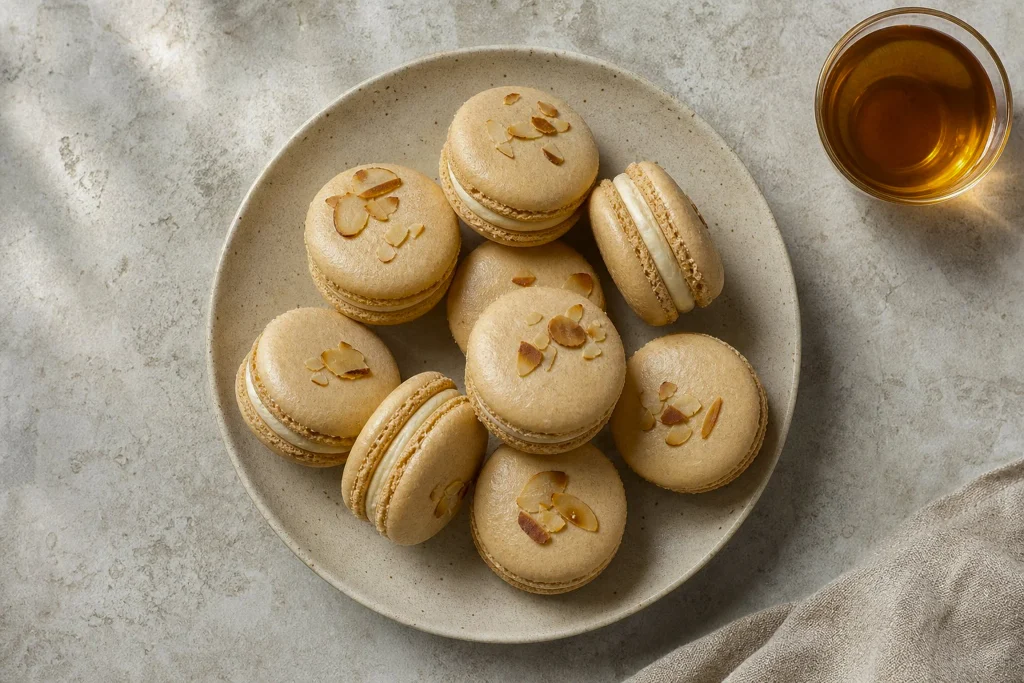
Let the macarons sit at room temperature for 15 minutes before serving, so the shells soften slightly and the honey buttercream reaches its full, silky texture. Arrange them on a white or pale platter to highlight their golden color, spacing them in neat rows or a circular pattern. A light dusting of toasted almonds or a drizzle of honey adds a nice finishing touch. These pair beautifully with tea, espresso, or a glass of dessert wine. Store leftovers in an airtight container in the fridge for up to five days, and bring back to room temperature before serving again.Why You’ll Love These Almond & Honey Macarons
There’s a particular kind of dessert that doesn’t need to shout to get your attention, and this is one of them. Almond and honey aren’t flashy together — they’re just right. I set out to make something that felt familiar the moment you tried it, but still a step above what you’d usually pick up on an ordinary afternoon. The kind of thing you’d be proud to hand someone as a gift, too.

What Goes Into Them
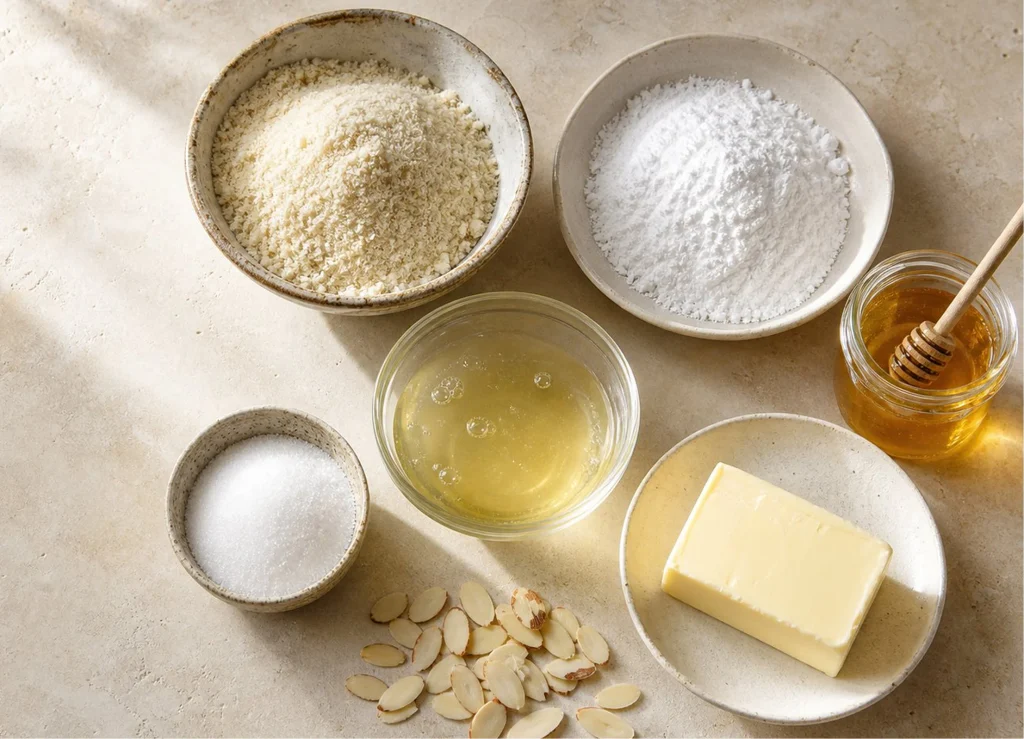
The list is short, which is part of the appeal: almond flour, powdered sugar, egg whites, granulated sugar for the meringue, butter for the filling, and honey — the real kind, straight from the jar, not a flavoring.
The Shell Is Where Macarons Are Won or Lost
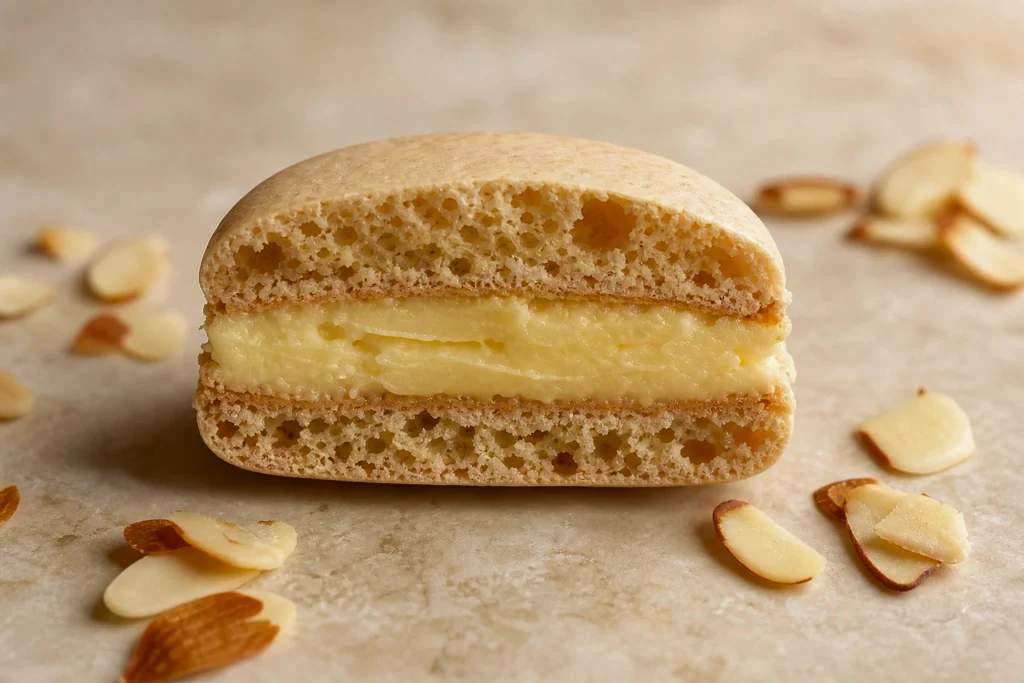
Anyone who’s attempted a macaron before knows this part isn’t forgiving. Almond flour gets folded into a whipped meringue, piped into careful rounds, and baked until the outside sets into a fine, crisp layer while the inside stays soft. Tap one and it barely gives a crack before revealing something almost weightless underneath. That gap between the crisp shell and the tender center is the whole appeal — it’s a small bite, but it’s doing a lot of work texturally.

Where the Honey Comes In
Once the shells cool, they get sandwiched with a buttercream built around real honey — not a splash for flavor, but enough that it actually shapes the filling. Honey has a way of rounding out a dessert rather than dominating it: a little floral, a little warm, and it leans right into the almond instead of fighting it. The result lands in a good spot — sweet without tipping over, rich without feeling heavy.
Why Almond and Honey, Specifically
This isn’t a new pairing — it shows up in baklava, in marzipan, in honey cake, across more cuisines than most people realize. Part of why it works here is that familiarity. It doesn’t ask you to trust an unusual flavor; it just delivers a version of something you already know, done a little more carefully.
There’s also just the look of the thing. A good macaron has a quiet kind of polish — smooth tops, that ruffled edge at the base that only shows up when the technique is right. It’s a small visual cue that someone paid attention.
If this is your first attempt at macarons, this flavor is a reasonable place to start — nothing about it is experimental. And if you’ve made plenty before, I’d still bet the honey filling catches you off guard a little. It’s familiar, just better than you’re expecting.
A Few Things That Actually Matter
Macarons reward precision more than talent. A kitchen scale beats measuring cups every time here — the ratios are too tight for guesswork. Let your egg whites sit out for 24 hours before you start; the reduced moisture makes for a sturdier meringue. When you fold in the almond flour, go slowly — too little mixing leaves lumpy shells, too much and the batter spreads flat. You want it moving like thick, slow syrup, settling back into itself within about ten seconds of stirring.
Don’t skip the resting period before baking — the shells need to form a dry, matte surface, or you won’t get that ruffled foot at all. Humid days work against you here, so pick a dry one if you can. Bake trays one at a time, rotating halfway if your oven has uneven spots. And once they’re filled, put them in the fridge for a full day before eating — it’s an extra step, but the texture afterward is noticeably better.

When to Serve Them
A plain tea works especially well alongside these, particularly something floral or lightly spiced — the honey in the macaron tends to draw out similar notes in the tea itself. If you’re building out a little macaron rotation, my Pistachio & White Chocolate Macaron pairs just as nicely with an afternoon tea, if you’re looking for something to try next.
More than anything, this recipe is about taking the time to do something properly. Each shell is piped individually, the filling is made in small batches, and every box gets packed with the same care I’d want if I were the one receiving it. However you’re serving these — for yourself, as a gift, or set out at a gathering — the goal is just a little unexpected sweetness in someone’s day.
Give the pairing a shot. It’s proof that the simplest combinations are often the ones worth returning to.
You Might Also Like:
More Easy Dessert Recipes
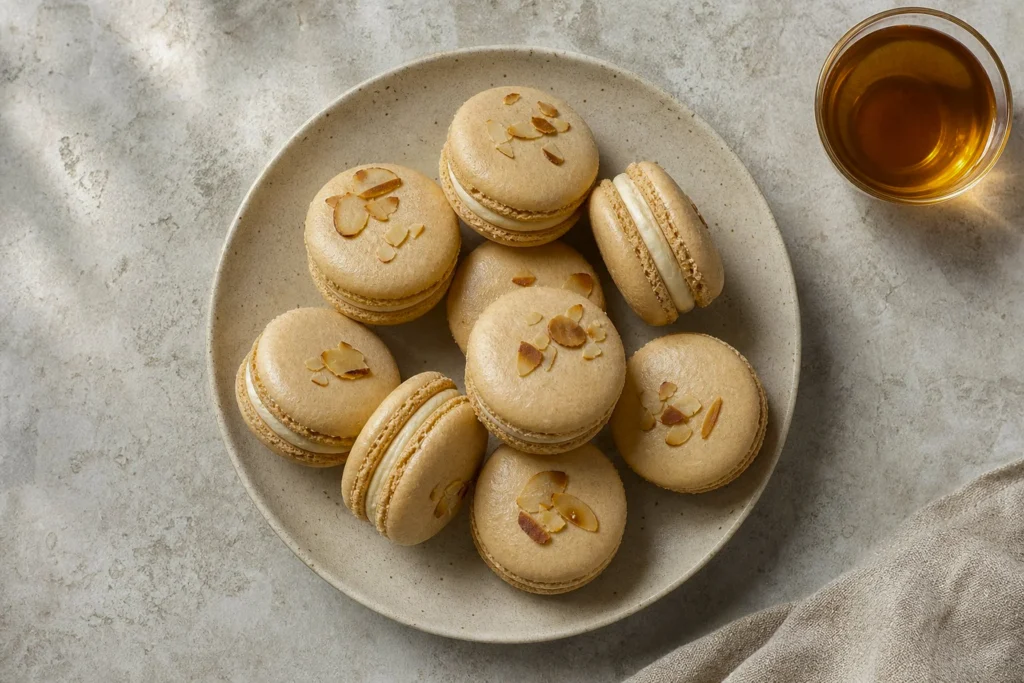
Almond & Honey Macarons: A Taste of Golden Sweetness
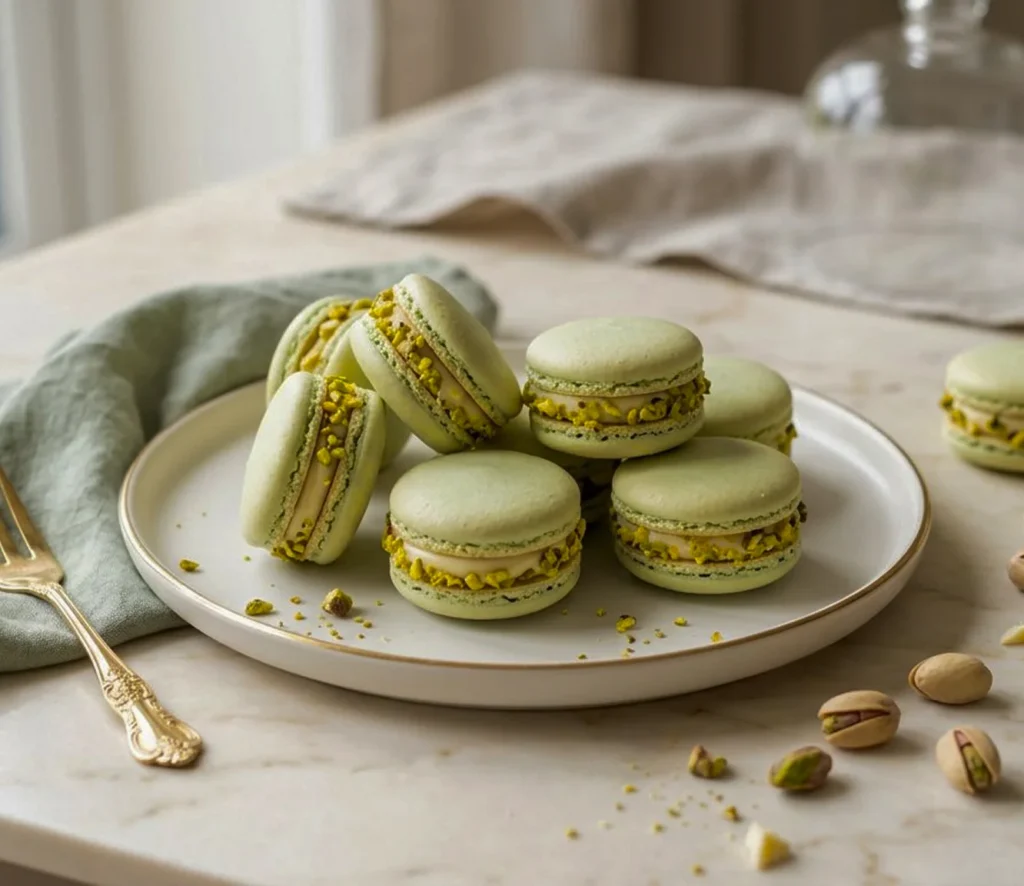
Pistachio and White Chocolate Macaron
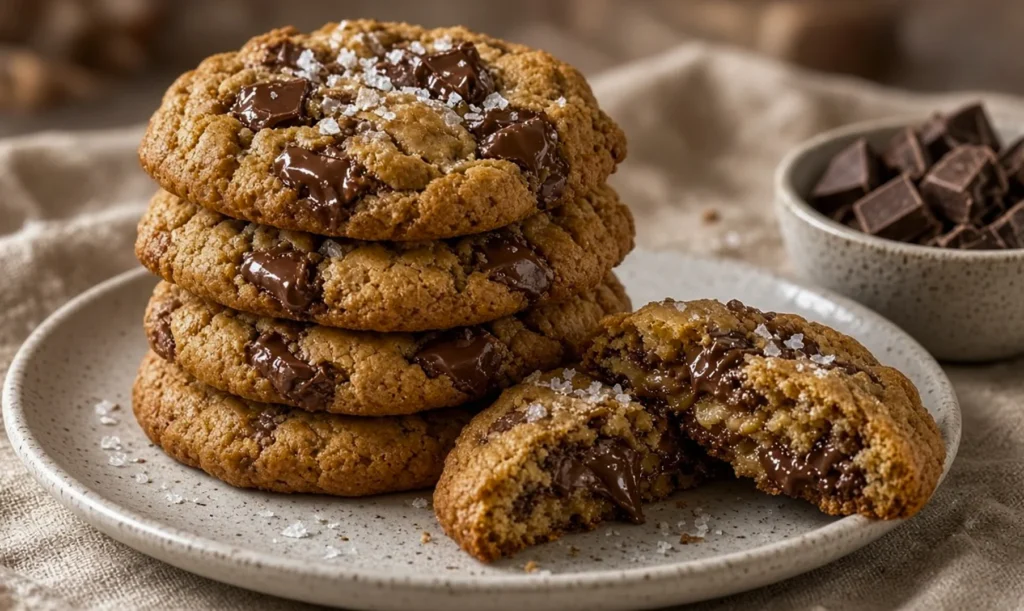
Chocolate Chip Cookies with Brown Butter