
Soft bread, a light and creamy grated-egg filling, and a crisp toasted layer inside. Makes 4 sandwiches.
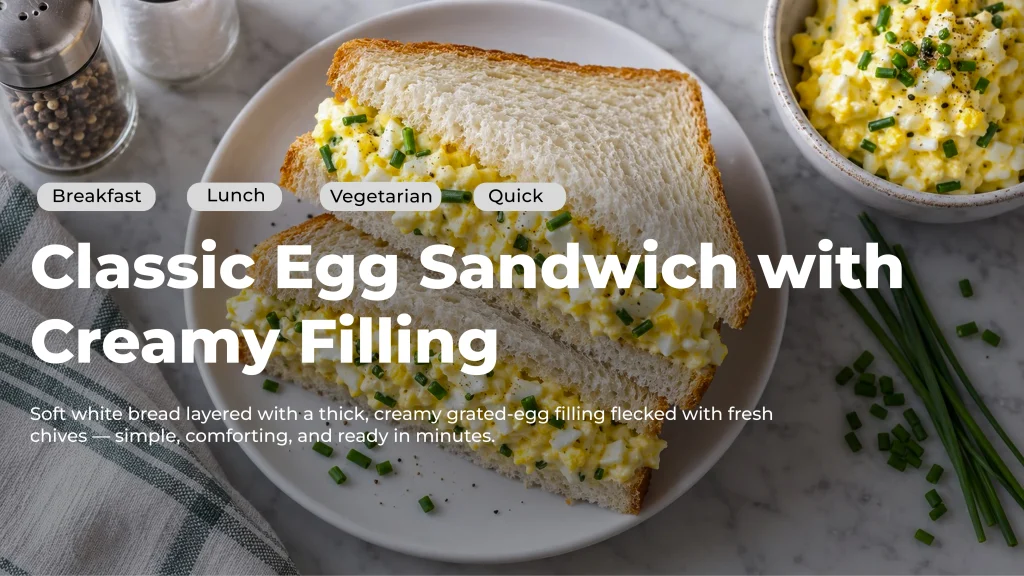
A good egg sandwich is simple, but a great one is all about texture. This version has a light, creamy filling that spreads easily, soft bread that stays tender on the outside, and a thin toasted layer inside that keeps everything from going soggy. It works for a packed lunch, a picnic, a quick dinner, or a tea-time snack, and you only need a handful of ingredients.
The two tricks that make it special are grating the eggs instead of mashing them, and toasting just one side of each slice of bread. Both are easy, and both change the result.
TAHACOOKS
Based in London, Taha is a professional recipe developer and food photographer. Since launching TahaCooks in 2025, he has shared his decade of culinary expertise to help home cooks master gourmet flavors. Every recipe on the site is triple-tested and designed to bring restaurant-quality results to the everyday kitchen.

Classic Egg Sandwich with Creamy Filling
Equipment
- 1 Large Saucepan Used for boiling eggs; ensure it's deep enough to cover eggs by 1 inch.
- 1 Medium Mixing Bowl For combining the Creamy Egg Filling and dressing.
- 1 Box Grater The "Kitchen Secret" for a perfectly uniform and fluffy texture.
- 1 Silicone Spatula Best for folding the mixture gently without smashing the egg curds.
- 1 Chef's Knife For precision slicing of the Soft Bread and herbs.
- 1 Toaster or Skillet To achieve that "Interior Toast" crunch.
Ingredients
- 8 – Large Eggs Best if used at room temperature before boiling.
- 1/2 cup Mayonnaise Use full-fat for the creamiest results.
- 1 tsp Dijon Mustard Adds a subtle tang to the yolk paste.
- 8 Slices Soft White Bread Brioche or Japanese Milk Bread is ideal.
- 1/2 tsp Salt & Black Pepper Adjust to taste; fresh ground pepper is best.
- 2 tsp Fresh Chives Finely minced; adds color and mild onion flavor.
- 1 tsp Pickle Juice Optional "Kitchen Secret" for an acid snap.
Instructions
- The Precision Boil Place your large eggs in a single layer at the bottom of a saucepan. Fill with cold water until the eggs are submerged by at least one inch. Bring the water to a rolling boil over high heat. As soon as it peaks, remove the pan from the heat, cover it with a tight-fitting lid, and set a timer for exactly 9 minutes. This creates a "jammy-firm" yolk that is creamy, not chalky.
- The Cold Shock & Peel While the eggs cook, prepare a bowl with equal parts ice and cold water. Once the 9 minutes are up, immediately transfer the eggs into the ice bath. Let them chill for at least 5 minutes. To peel, gently crack the shell all over; the water helps the membrane slip right off, leaving you with perfectly smooth whites.
- The Texture Secret (Grating) Dry the peeled eggs thoroughly. Using the large holes of a box grater, grate the eggs into a medium mixing bowl. This technique ensures the whites and yolks are evenly distributed, creating a light, airy foundation that holds the dressing much better than chunky mashed eggs.
- The Flavor Emulsion In a small separate ramekin, whisk together the mayonnaise, Dijon mustard, salt, pepper, and that "Kitchen Secret" splash of pickle juice. Pour this mixture over the grated eggs and add your minced chives. Use a silicone spatula to fold gently—don't over-mix, or you'll lose the fluffy texture.
- The Strategic Toast Place your bread slices in a dry skillet or under a broiler. Toast only one side of each slice until golden brown. This "Interior Toast" method provides a structural crunch that prevents the bread from getting soggy, while keeping the outside of the sandwich pillowy-soft to the touch.
- Assembly & Final Slice Lay your bread slices out with the toasted sides facing up. Divide the Creamy Egg Filling equally among four slices, spreading it thick right to the edges. Top with the remaining slices (toasted side down). Use a sharp serrated knife to slice diagonally for that classic deli presentation.
Notes
Serving & Presentation
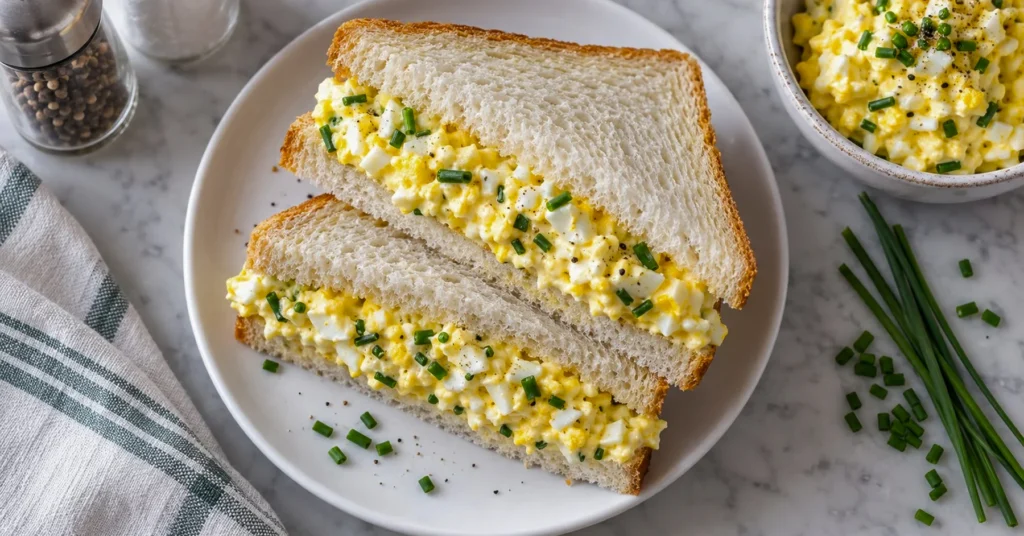
- The Diagonal Cut: Always slice the sandwich diagonally. This classic “deli cut” creates a visually appealing cross-section that showcases the thickness of the Creamy Egg Filling.
- Edge-to-Edge Spread: Ensure the filling reaches the very corners of the bread. This prevents “dry bites” and makes the sandwich look abundant and professional.
- The Garnish Pop: Save a pinch of fresh chives or a dusting of smoked paprika to sprinkle over the filling just before closing the sandwich. It adds a pop of color that signals freshness.
- Plate Pairing: Serve on a solid-colored ceramic plate to let the golden yolks and white bread stand out. Pair with a few kettle chips or a crisp pickle spear for a texture contrast.
- Temperature Matters: For the best experience, serve immediately while the interior toast is still slightly warm but the egg filling is cool.
Why I Love This Recipe
This is the sandwich I make when I want something simple and satisfying without much effort. I prepare the eggs first so they can chill while I get everything else ready, then fold the filling gently so it stays light. I like to cut the sandwiches diagonally, because it makes even a quick lunch feel a little more special.

What Makes This Egg Sandwich Different
Plenty of egg sandwiches end up heavy, wet, or lumpy. This one avoids those problems with a few careful choices:
- Grated eggs, not mashed. The whites and yolks break into fine, even pieces that mix smoothly with the dressing.
- A balanced dressing. Mayonnaise gives richness, Dijon mustard adds a gentle tang, and a small splash of pickle juice brightens the flavor.
- Soft bread with a toasted layer inside. The outside stays tender, and the toasted inner side works as a barrier against the filling.
- Fresh chives. They add color and a mild onion flavor without overpowering the eggs.
How to Cook Eggs for Egg Sandwich Filling
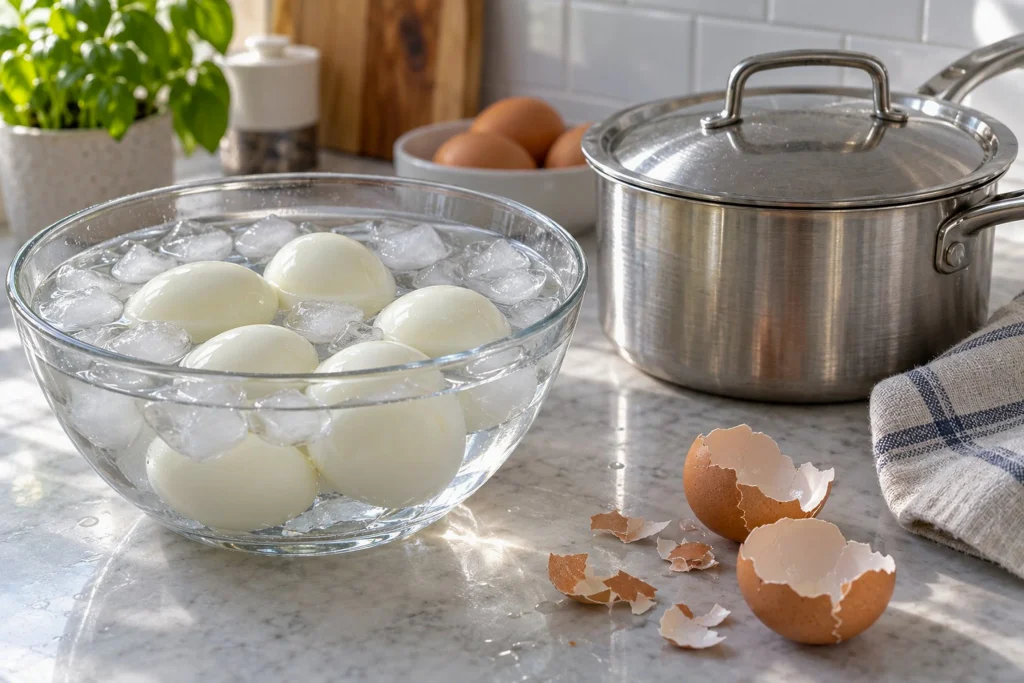
The eggs matter most, so it’s worth getting them right.
Start in cold water. Place the eggs in a single layer in a saucepan and cover them with cold water by about 2.5 cm (1 inch). This helps them heat evenly and cuts the risk of cracking.
Bring to a boil, then turn off the heat. Once the water reaches a rolling boil, take the pan off the heat, cover it with a tight lid, and set a timer for 9 minutes. The gentle heat cooks the eggs through without making the whites rubbery.
Chill them in an ice bath. Moving the eggs to a bowl of ice water for at least 5 minutes stops the cooking, helps prevent a gray-green ring around the yolk, and makes the shells much easier to peel.
Peel under cool water if needed. Crack the shell all over and let the water slip under the membrane. The shell often comes off in large pieces.
Why You Should Grate the Eggs
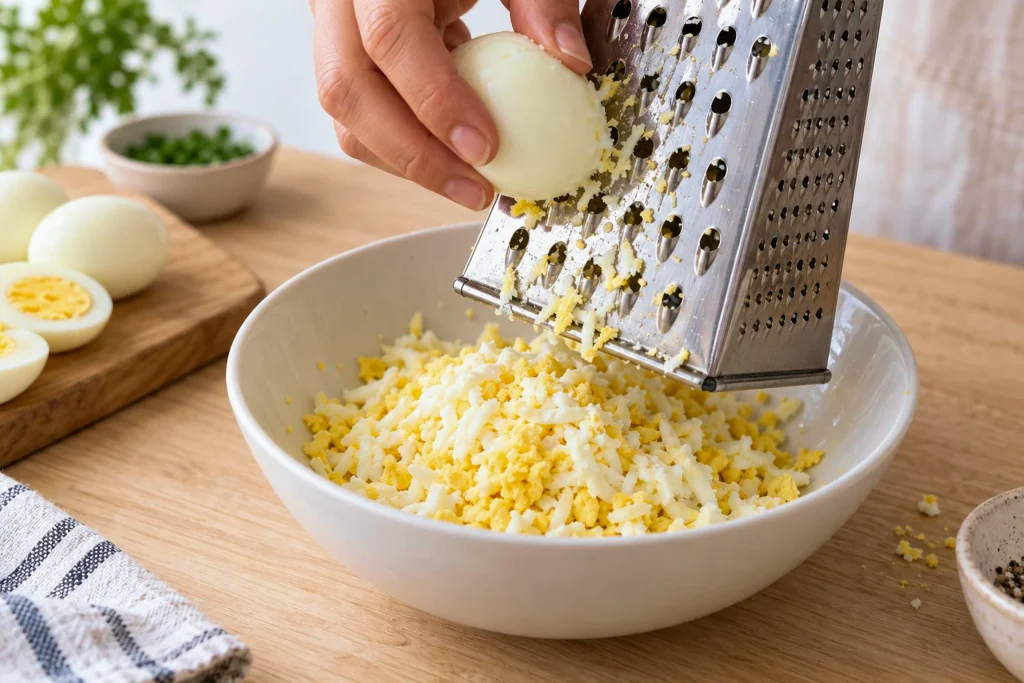
Mashing eggs with a fork gives uneven results: some chunks, some paste. Using the large holes of a box grater gives you:
- light, fluffy strands of egg
- even distribution of white and yolk
- a filling that holds together without feeling dense
- less effort and fewer dishes than chopping
Make sure the peeled eggs are dry before you grate them, as wet eggs slip and clump.
How to Make a Creamy Filling That Isn’t Heavy

Mix the dressing in a separate small bowl first, then pour it over the grated eggs. That way it blends evenly and you don’t have to overwork the eggs.
- Fold, don’t stir. A silicone spatula and a few gentle folds keep the filling light.
- Taste before you assemble. Add a little more salt, pepper, or pickle juice if you want a sharper flavor.
- Add acid carefully. A small splash is enough. It cuts through the richness without making the filling taste sour.
- Use full-fat mayonnaise for the creamiest result.
The Best Bread for Egg Sandwiches
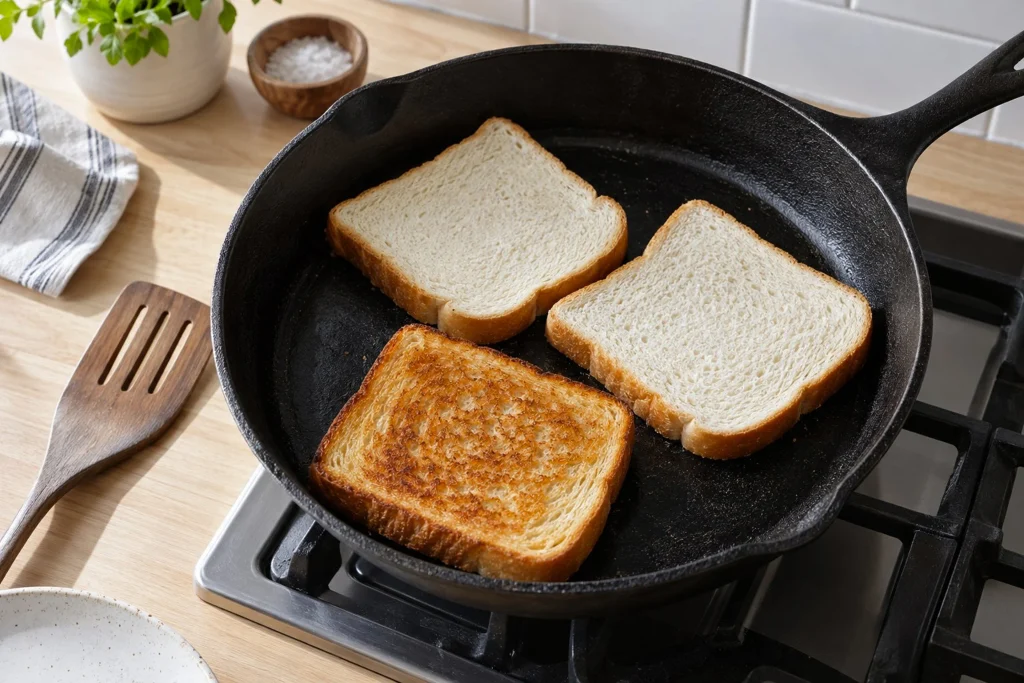
Soft white bread, brioche, or Japanese milk bread all work well. They are tender, slightly sweet, and balance the savory filling.
For the best texture, toast only one side of each slice, in a dry skillet or under the grill, until golden. Then build the sandwich with the toasted sides facing inward. The outside stays pillowy, and the inside has a thin crisp layer that stops the filling from soaking in.
How to Assemble and Slice
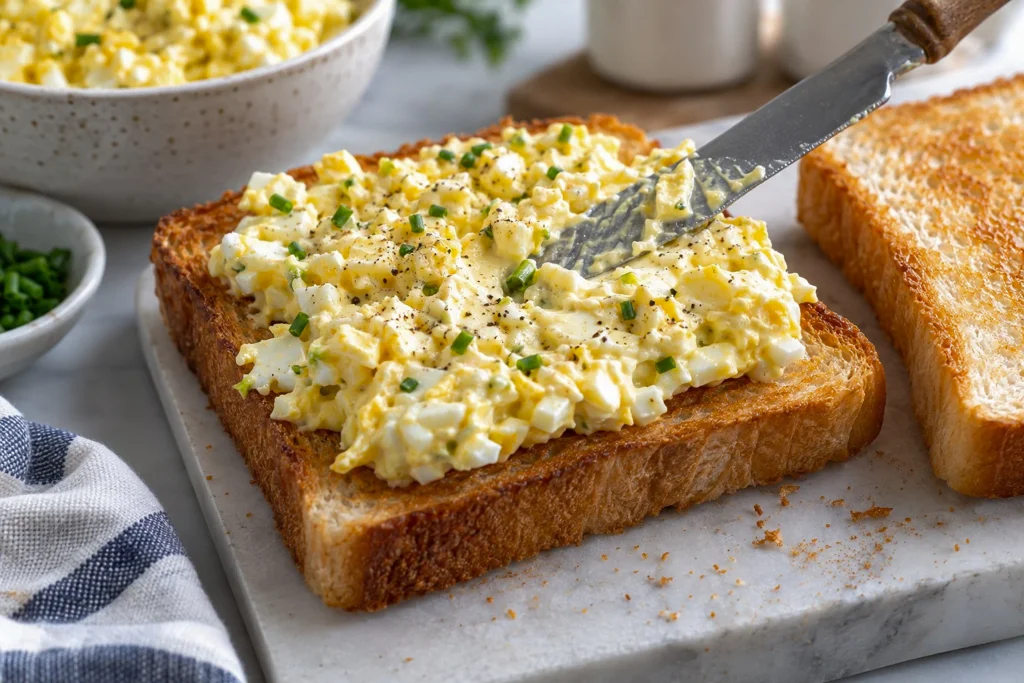
- Lay the slices out with the toasted sides facing up.
- Spread the filling thickly and right to the edges, so every bite has some.
- Top with the remaining slices, toasted side down.
- Slice with a sharp serrated knife, using a gentle sawing motion, so the soft bread doesn’t squash.
- Cut diagonally for a classic café look.
Ways to Change It Up
- Herbs: swap chives for fresh dill or add a little parsley.
- Crunch: add crisp butter lettuce or thin slices of cucumber.
- Creamy: layer in sliced avocado.
- Heat: add a little hot sauce or a pinch of cayenne.
- Seasoning: finish with everything bagel seasoning.
- Open-faced: serve the filling on a thick slice of toasted sourdough.
- Party size: use small brioche rolls to make mini sliders.
What to Serve With Egg Sandwiches
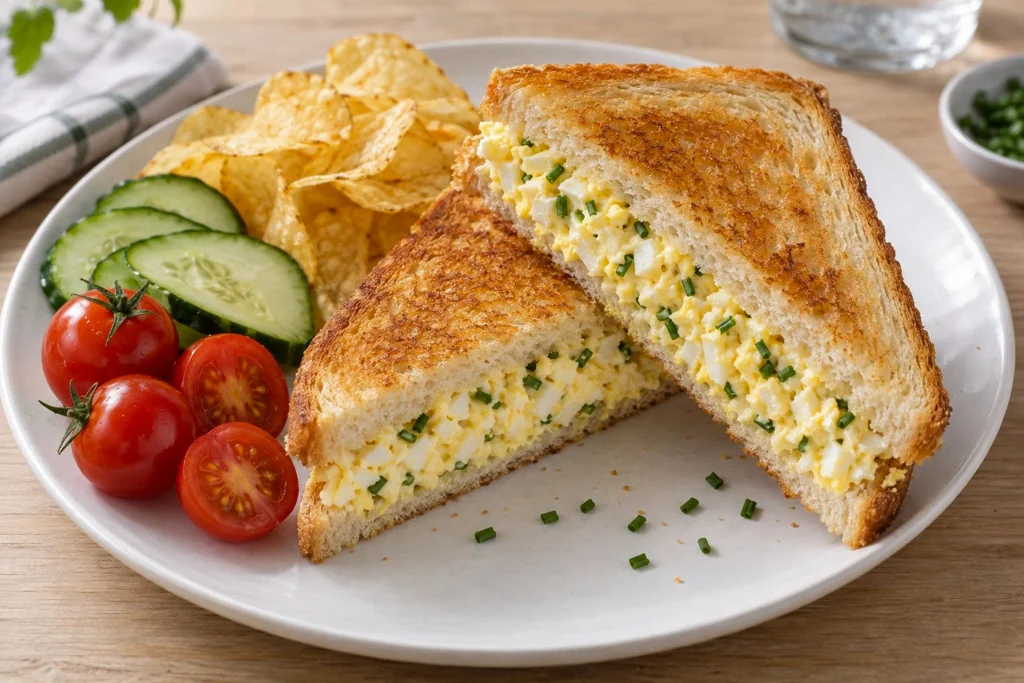
They go well with a simple side salad, crisps, pickles, tomato soup, or fresh fruit. For a picnic or lunchbox, wrap them in parchment paper and add some cherry tomatoes and cucumber sticksLooking for another egg dish? Try my Golden Dippy Eggs & Crisp Soldiers.
Storage and Food Safety
Egg salad contains mayonnaise and cooked eggs, so keep it cold. The Food Standards Agency advises keeping your fridge at 5°C or below, and putting cooked food in the fridge within 1 to 2 hours of cooling. For more on safe chilling at home, see Food Standards Scotland’s guide to chilling food.
- Fridge: store the filling in an airtight container for up to 3 days.
- Assembled sandwiches: best eaten the same day, because the bread softens over time.
- Lunchboxes: keep them in a cool bag with an ice pack.
- Out of the fridge: don’t leave egg sandwiches at room temperature for more than 2 hours, or 1 hour in hot weather.
- Freezing: not recommended. The filling turns watery and the whites become rubbery.
Common Mistakes to Avoid
- Overcooking the eggs, which makes the yolks dry and chalky
- Skipping the ice bath, which makes peeling harder and can leave a gray ring
- Mashing instead of grating, which gives a lumpy, uneven filling
- Over-mixing, which makes it dense and pasty
- Using thin or fresh bread that’s too soft, which can tear when you spread
- Making sandwiches too far ahead, which leads to soggy bread
Final Thoughts
A classic egg sandwich can be so much better than the usual packed-lunch version. Cook the eggs carefully, grate them, fold the filling gently, and toast one side of the bread, and you get a soft, creamy sandwich with just enough crunch. Make it once as written, then adjust the herbs and toppings to suit you.

You Might Also Like:
More Easy Breakfast Recipes

Creamy Coconut Chicken Curry – Easy Dinner Recipe
Southern Coleslaw Recipe

Rich & Creamy Mushroom Soup (Easy Homemade Recipe)

Almond & Honey Macarons: A Taste of Golden Sweetness
Easy Egg Recipes

Golden Dippy Eggs & Crisp Soldiers
Classic Egg Sandwich with Creamy Filling

Velvety Morning Scrambled Eggs: An Elevated Classic
